
Coming soon · Windows first
All of your models, one workspace, your machine.
Chat, images, video, music, documents and code, each in its own window, each on a model you choose. Hosted, or running on the graphics card you already own.
No subscription and no credits. Bring your own keys.
Shot 01 · three keyframes, one scene
-

-

-



> npm run build
webpack 5.97 compiled in 8.41s
> git status
3 files changed
Danger guard: rm -rf build/ · allow once?
Which of these three export paths keeps the timeline frame-accurate?
 Hold Alt+Shift+Space and talk
 - Any model, in any window
- Hosted or local, they sit in the same list and swap with one click.
- Everything lives on your disk
- One database file you can copy, back up, or delete.
- There is no server to go down
- It keeps working whether or not we do.
The desk
Put the work where you want it.
Work runs in parallel: a video rendering in one window while you write in another and a coding agent works in a third. Nothing waits on anything else, and each title bar shows what it is costing you while it runs.
- Right-click anything and send it somewhere: a render to the canvas, a reply into a document, a file to a coding agent.
- Zoom out and the whole project sits on one screen; zoom in and you are inside a single conversation.
- Every action has one name, whether you type it or ask for it.
Same question to all three. Two rounds of discussion, then synthesise.
Models
Point a window at anything.
One live list feeds every picker, and each model carries what it can actually do: vision, tools, reasoning. Your keys are encrypted by the operating system keychain and never reach a window. Claude Code and Codex run on the subscription you already pay for.
- Anthropic
- OpenAI
- Google Gemini
- xAI
- Groq
- Together AI
- Mistral
- DeepSeek
- OpenRouter
- Ollama
- llama.cpp
- LM Studio
- + any OpenAI-compatible endpoint
- Keys
- Encrypted by the OS keychain and held in the main process. Nothing on screen can read them. You pay the provider directly; we never see a cent or a token.
- Subscriptions
- Already paying for Claude Code or Codex? They run on that login and show up in the picker like any other model.
- Local engines
- Ollama, llama.cpp and LM Studio are servers you run. Umbrelis connects to them and never starts or stops one without being told.
- Anything else
- Anything that speaks the OpenAI or Anthropic protocol is a form in Preferences: vLLM, SGLang, TGI, or a gateway you host.
Side by side
One question. Every model you have.
Send the same prompt to as many as you like from one composer, then have a model on your own machine grade the answers. Nothing is stopping you comparing a flagship against something free except the tab you would have had to open.
Illustrative figures, not a benchmark we ran. Your own numbers depend on your card, your keys and your question, which is the point of being able to run it yourself.
Studios
From a sentence to a finished cut.
The Visual Canvas is a board of lanes you wire together: text to image to video to upscale to sound. Each lane runs a local ComfyUI graph or a hosted model, and a prompt writer rewrites your plain sentence into whatever that model wants to hear.
-
Lane 01
Prompt writer
Plain words in, the prompt this engine wants out.
-
Lane 02
Image · ComfyUI
Your own ComfyUI graph, or a hosted model, same list.
-
Lane 03
Video
Turns the frames above into a shot.
-
Lane 04
Sound
Music, effects or narration, generated to length.
-
Studio
A real timeline. Frame-accurate scrubbing, stacked tracks, an audio mix, and an export that matches the preview.
-
Audio workbench
Write a song, clone a voice, narrate a script, split stems, clean a take. Every model runs on your machine.
-
Piano roll
A real piano roll with FL Studio keybinds, quantize, a built-in synth, and your own VST3 and CLAP plugins behind it.
-
Code
Claude Code, Codex, pi, or Umbrelis's own agent, next to a real terminal. Every command is read before it runs, and the risky ones ask first.
-
Doc
Opens and saves .docx and PDF, and shows you every AI edit before it lands.
-
Library
The prompt, the seed and the model stay with the file, so you can make it again.
Consistency
Enough coverage to actually cut with.
Spinning one prompt four hundred times gives you four hundred of the same picture. A shot list gives you something you can edit: several takes of a scene until one holds, then the next scene, with the character, the wardrobe and the light carrying across all of them.
-
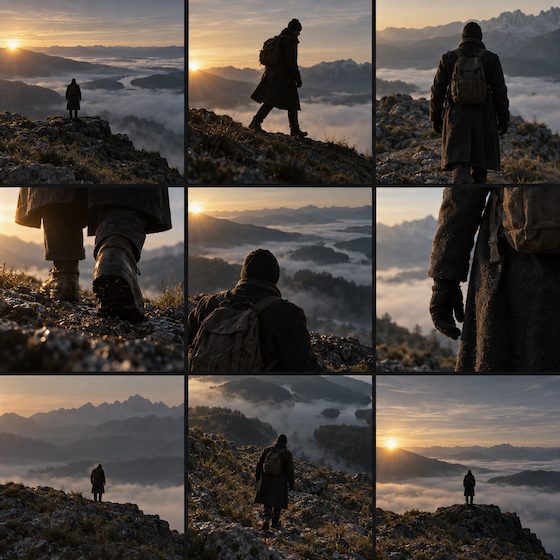
01 Dawn on the ridge 9 takes
-
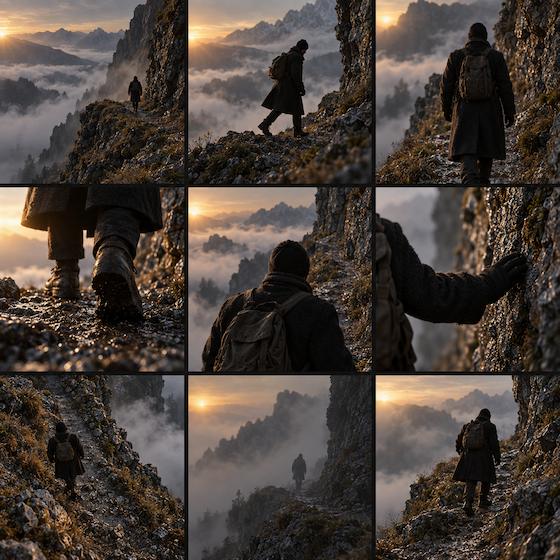
02 The path 9 takes
-
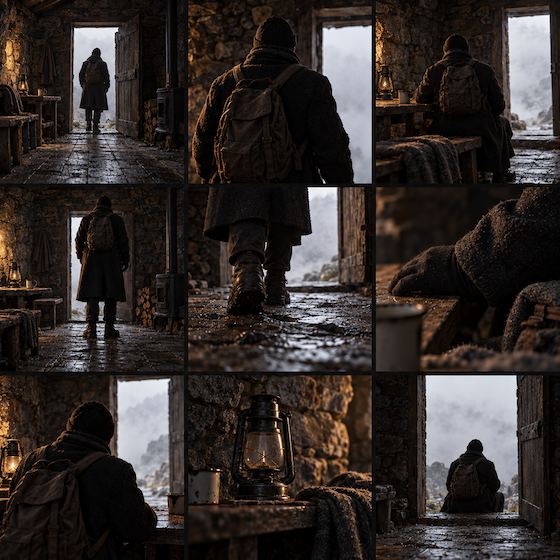
03 The shelter 9 takes
-
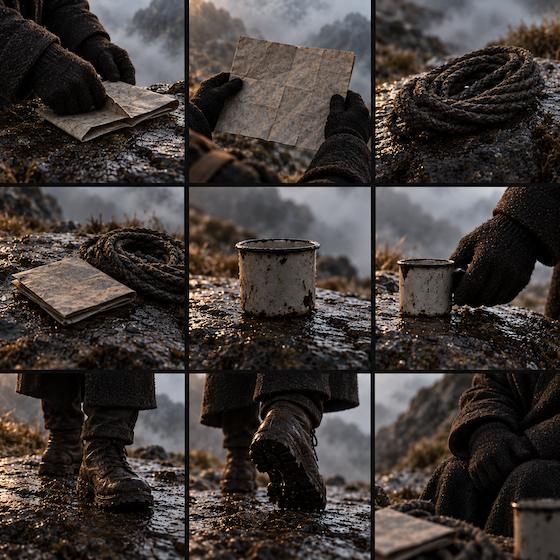
04 The detail 9 takes
-
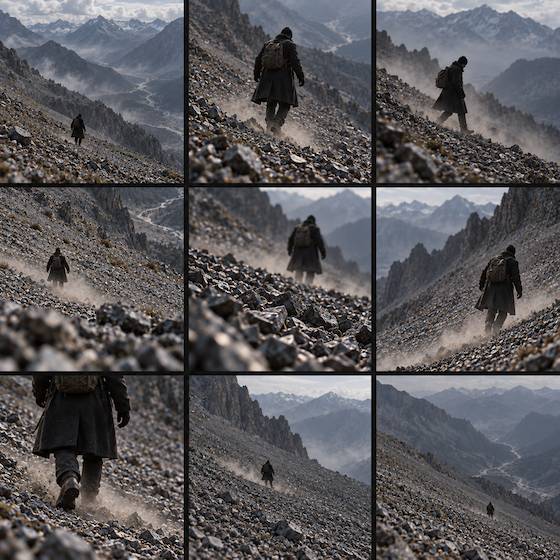
05 The descent 9 takes
-
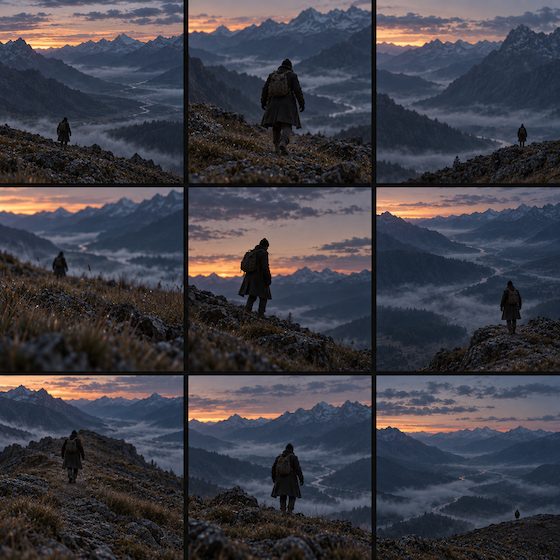
06 Last light 9 takes


- 6 scenes
- Each one shot until the takes matched each other.
- 54 takes
- Same coat, same light, same weather, across all of them.
- $0.00
- Every take. The card was already paid for.
- $1,340
- The same coverage on a metered image API.
Assistant Put the last render on the timeline and score it.
- Library · picked render_0412.mp4
- Studio · placed at 00:00:00
- Canvas · running the score lane
The assistant
One assistant, and it has hands.
There is one assistant and one thread. Reach it from the pill, from Ctrl+K, from your phone, or by holding Alt+Shift+Space and talking. It can see what is open and work in it: run a lane, brief a coding agent, write into another window and wait for the answer.
- The pill
- Alt+Shift+Space
- Ctrl+K
- Your phone
- Its own name
First launch
Only what your card can actually run.
It reads your processor, memory, graphics card and free disk, then marks every model as fits, tight or too large for this machine. Install pulls the model, the workflow and its files as one job, and undoes the lot if a step fails.
- Fits Qwen3.5 9B · chat, tools, vision Install
- Fits FLUX.1 schnell · image lane Install
- Tight Wan 2.2 · text to video Install
- Too large Llama 3.3 70B Hosted instead
- Where the data is
- Everything is in one file: umbrelis.db, in your user folder. Conversations, search index, embeddings, window layout, memory and settings. Renders sit beside it and the Library indexes them. Deleting moves to Trash; only you empty it.
- Licences
- Every model and workflow shows its licence, in the Store and in the Library. Nothing is ever refused on those grounds.

Tell me when it ships
Your graphics card is idle most of the day. Images, video, music, voice and local chat models are what it could be doing instead.
One email when Umbrelis is ready to download, and nothing else. Your address stays here.
Thanks. You will hear from us once, when it ships.
Coming soon · Windows 10 and 11, x64 · No subscription and no credits. Bring your own keys.